Topic outline
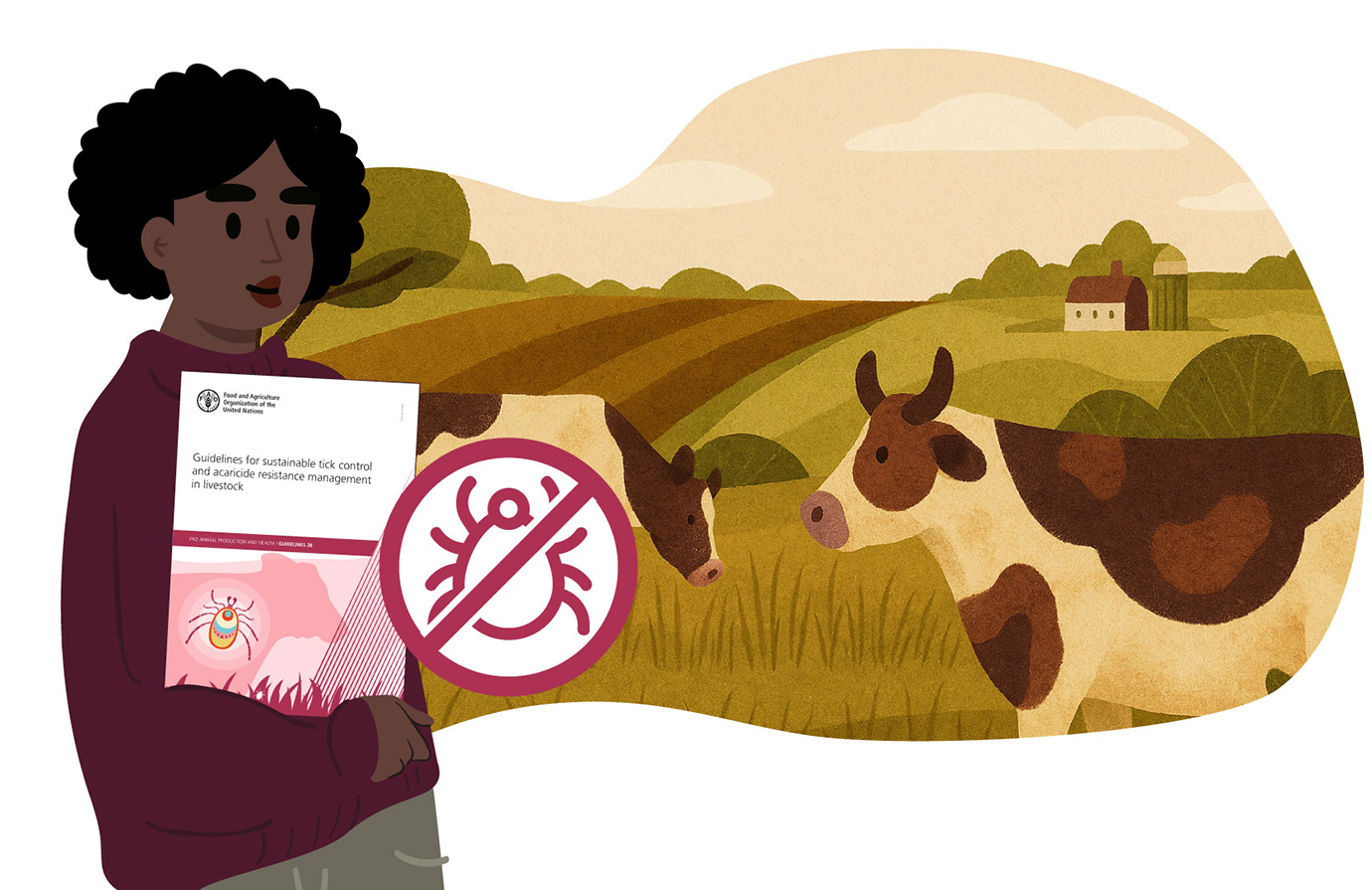
This course examines the challenges associated with livestock tick infestations, with a detailed focus on the biology of ticks and the factors that contribute to their spread. It also covers the different characteristics and mechanisms of action of acaricides and the factors that drive the development of acaricide resistance. In addition, the course explores the integrated approach to tick management and outlines key factors to be considered and the design steps involved in developing an effective integrated tick management programme.


This course targets:
- Animal health professionals
- Animal scientists
- Animal health students
- Policymakers
- Tick biology.
- The most common ticks and tick-borne diseases affecting cattle and their economic impact on the livestock sector.
- The different types of acaricides, their mechanisms of action and good practices for their use.
- Acaricide resistance and its causes.
- The integrated tick management approach, key elements for designing an integrated tick management programme and its development process.
The course is composed of six lessons, lasting approximately from 20 to 35 minutes each:
- Lesson 1 - Ticks and their key features
- Lesson 2 - Ticks and livestock
- Lesson 3 - Acaricides
- Lesson 4 - The challenge of acaricide resistance
- Lesson 5 - Adopting an integrated tick management approach
- Lesson 6 - Designing an integrated tick management programme
This course runs on the latest versions of the major browsers, such as Google Chrome, Microsoft Edge, Mozilla Firefox and Apple Safari.
The course opens in a separate popup window. If this does not happen, a popup blocker in the browser is probably preventing it from opening and you will need to disable popup blockers for this site. Please read the following instructions on how to do this.
Digital certification
This course offers certification. You will get your digital badge upon passing a final exam after completing the course and achieving a grade of at least 75%. Please click on the button below to complete the exam, or refer to our Certification section to learn more.
Evaluate this course
We would be pleased to receive your evaluation of this course, to support us in improving future e-learning courses. Please click on the button below to answer the questions in the form. It should only take you a few minutes!
General
Partners
This course was developed through a grant provided by the Gates Foundation.